Wednesday, 25 January 2017

Sharpless 2-106 (The Cosmic Angel)


Sharpless 2- 106 also known as the cosmic angel, is a nebula located roughly 2,000 light years away from Earth in the constellation of Cygnus. At the center of the nebula lies a massive star which emits large plooms of extremely hot gas from either end of its poles, seen in the image above. The central star is referred to as S106 IR or S106IRS 4. The central star is roughly 17 times larger than our sun with a surface temperature of around 40,000 Kelvin. The nebula is about 2.2 light years in size and contains areas where star formation takes place, being home to brown dwarf stars and protostars. Heat emitted from these surrounding stars ionizes the gases within the nebula, which causes the gas clouds to glow.

The image above was captured by the wide field camera 3 on the Hubble Space Telescope.


Tuesday, 24 January 2017

Statue of Zeus at Olympia


This statue of  Zeus was thought to be at the centre of Olympia in 438BC, standing about 13 meters in height.  After completing the statue, the Greek sculptor phiedias had a pool of olive oil constructed at the bottom of the sculpture. The oil would slowly evaporate, coating the statue in oil, helping to keep the ivory skin of the statue from cracking. Emperor Theodosius had the statue dismantled around the 5th century AD, where it is said to have been shipped to Constantinople, then possibly destroyed in a palace fire.

Messier 16


Messier 16 is a gigantic cloud made up of interstellar gas and dust, sitting about 7,200 light years away from Earth in the constellation Serpens. The nebula is home to both newly forming and older stars. The heat and radiation coming from these stars have ionized the surrounding gases, causing the clouds to glow in various colours. The nebula contains many open clusters of stars, one such cluster is said to contain around 8,500 stars. One of the brightest stars found within Messier 16 is HD 168076 which is calculated to be 80 times bigger than our sun and 1 million times brighter. The nebula was first discovered by Jean Philippe de Chateaux in 1745. The image above was captured by the Wide Field Imager Camera at the La Silla Observatory.

Monday, 28 November 2016

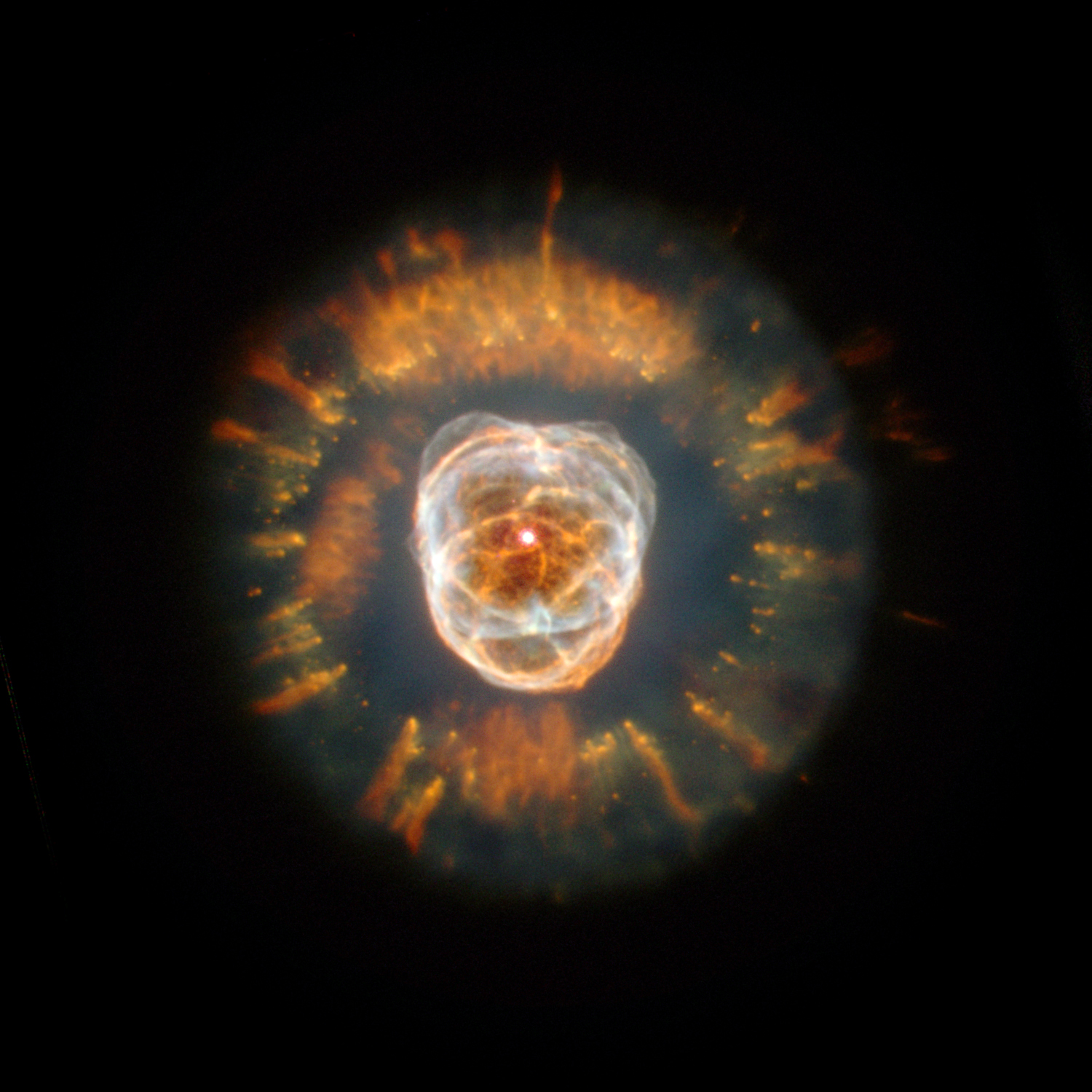
NGC 2392 (Eskimo Nebula)


NGC 2392 also known as Caldwell 39, the clown face nebula and the eskimo nebula lies 3,000 light years away from Earth, located in the constellation of Gemini. A dying star sits at the center of the gas cloud, ejecting it's outlayers into the cosmos. The outer ring surrounding the dying star is made up of comet like structures which have streams of gas flowing from them, created by stellar winds coming from the central star. NGC 2392 was first discovered by William Herschel in England on the 17th of January 1787.

The image above was captured by the Hubble Space Telescope.


Tuesday, 15 November 2016

Pillars of Creation

The image above is composed of 32 sepearate images collected from the Hubble space telescope.


Located 8,000 light years away from earth in the eagle nebula, the pillars of creation are estimated to be between 3-4 million light years in length. The star forming pillars are made up mostly of dust and Hydrogen, the gas within the pillars are literally evarporating away due to the surrounding heat radiating from nearby stars. Some theorists speculate that the pillars may have been struck by a shockwave from a supernova almost 7,000 years ago. Because light travels at a "constant" speed, we won't see the destruction of the pillars for another 1,000 years. Other theorists state that stronger volumes of x-ray and radio radiation would have been measurable if the pillars had indeed been struck by a shockwave, but this is not the case.


Tuesday, 18 October 2016

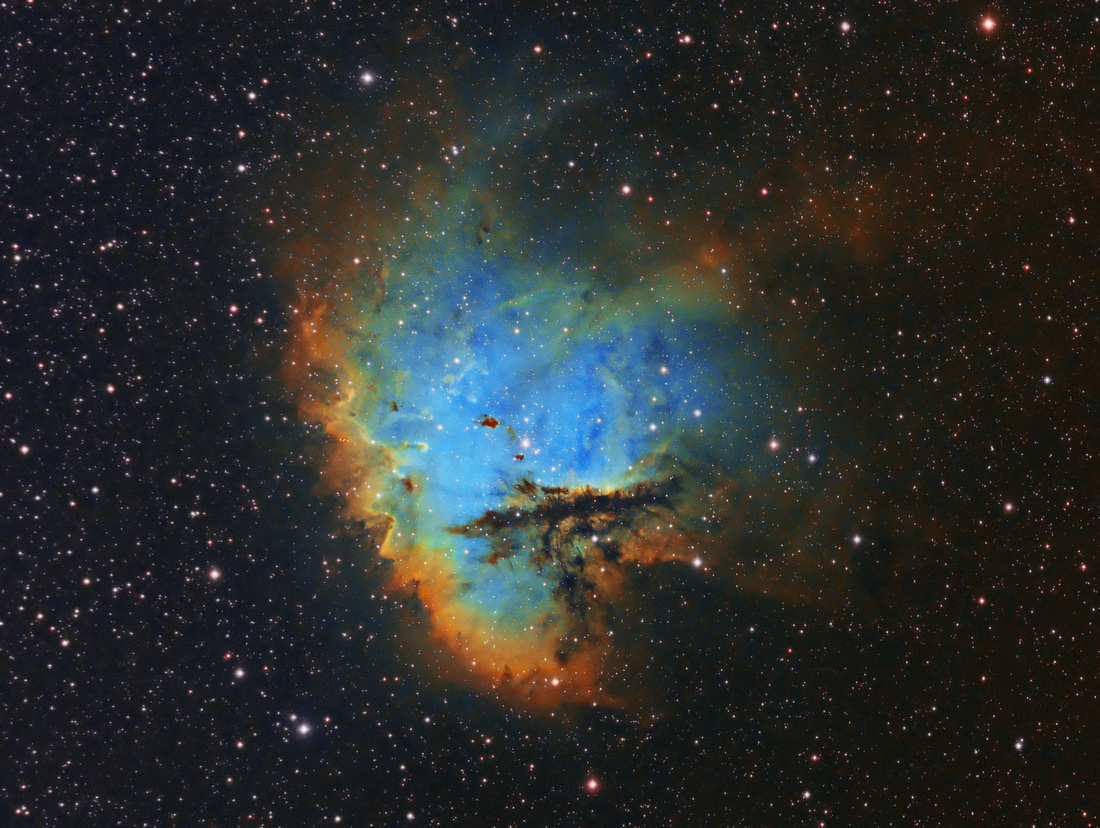
Pacman Nebula ( NGC 281)


NGC 281 ( PacMan nebula ) is located in the constellation of Cassiopeia, 10,000 light years away from Earth. NGC 281 has a diameter, roughly spanning to around 90 light years in length.
NGC 281 is made up of a open star cluster which contains a few thousand stars, the multiple star HD5005 and dense clouds of cosmic dust and gas called Bok Globules. It is the luminosity of the stars within the nebula that cause the gases to glow, which can be seen in the image above.

The nebula was discovered by E.E Barnard in August 1883.

Bara Gumbad


Bara Gumbad is a historic monument situated in Delhi, India in Lodhi gardens. The monument is thought to have been constructed in around 1490CE. The exact purpose for the construction of the monument is unkown and still remains a mystery to this date. Bara Gumbad is 95ft high, 66ft wide and 66ft long. The monument is assembled of red, black, grey quartzite and sandstone. The interior of the monument is made up of various forms of artwork, colored tiles and elaborat carvings and inscriptions.