Tuesday, 19 May 2015

Beta Pictoris


Found 63.4 light years away from our solar system Beta Pictoris is a massive Star similar to our own Sun. Estimated to be around 15 million years of age located in the constellation of Pictor, shining about 8 times the luminosity of our sun and is roughly twice its size. Beta Pictoris is thought to have formed due to the sudden collapse of a huge gas cloud, roughly 15 million years later the planet now stands at roughly 1.8 solar masses detailed observations revealed that a debris disk made up of gas and dust is orbiting around the Star. There is enough evidence to suggest that planet formation may be taking place within the disk whilst it has been confirmed that a planet within the debris disk named Beta Pictoris B does orbit around the star. Beta Pictoris B itself is a massive planet, around 2 twice the size of Jupiter and spins 100 times faster than Earth at speeds over 1,700 KMPH. A day on the planet Beta Pictoris B would only last 8 hours.  

Tuesday, 14 April 2015

Some of the worlds largest man made structures.

5. Burj Khalifa. 


The Burj Khalifa, a skyscraper located in Dubai recorded as the tallest building in the world since 2010. Construction of the building started on the 6th of January 2004 and was complete on the 30th of December 2009, open to the public on the 4th of January 2010. The building consists of 211 levels, 58 elevators and a overall floor area of around 3,331,100sq cubic feet. The skyscraper stands 829.8 meters in height and is estimated to cost around 1.5 billion dollars. 


4. The Great Wall Of China. 


The great wall of China over 2,000 years old, built across the northern border of China around 221BC to help protect the Chinese empires from oncoming raids and attacks. Starting with only a few wall fortifications made up of stone, earth and wood to further be joined together with most of the wall being built between 1368 and 1644. The wall was constructed throughout many dynasties reaching a total length of 13,170 miles.


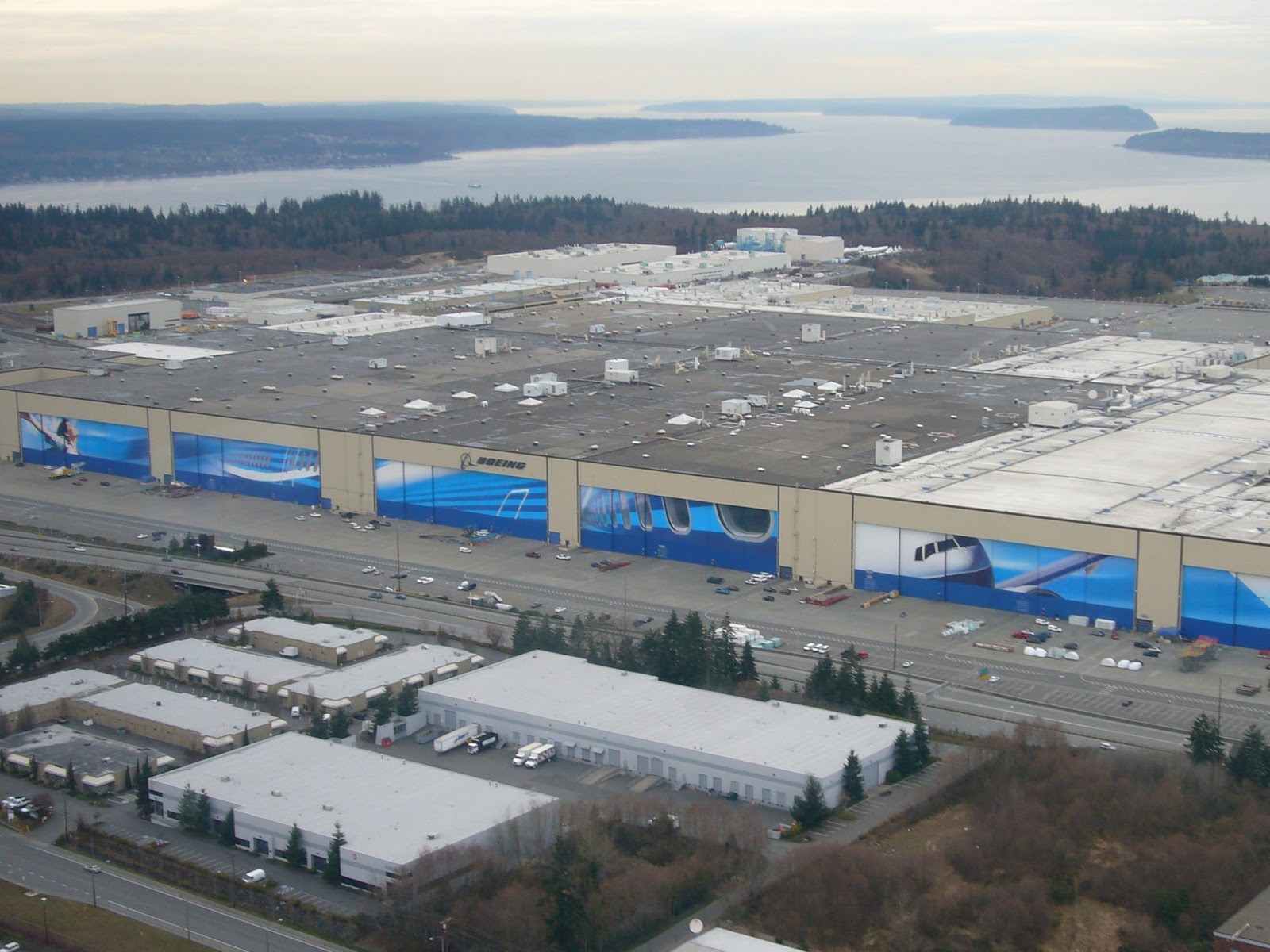
3. Boeing Everett Facility.


The largest building in the world by a measure of volume. Opened around 1945 as a air-plane assembly factory producing the Boeing model aircraft on 98.3 acres of land with a volume around
13,400,000 meters cubed.


2. Atlantis PQ.


The Atlantis Platform is the deepest moored floating oil and gas production facility in the world. BP owns 56 % of the Atlantis Platform whilst the other 44% is owned by BHB Billiton. The platform stays afloat in water depths around 7,900ft deep. Weighing over 58,000 tons the platform can hold up to 200,000 barrels of oil and 180 million cubic feet of gas a day.


1. Tuatona Mine 


The Gold mine is located in Carltonville, South Africa. The shaft was blown away in 1957 and mining began in 1962. It is one of three gold mines found on the west wits gold field owned by AngloGold Ashanti. The deepest of the three shafts is western deep number 3 shaft, also known as the tuatona mine. At 2.4 miles deep, the tuatona mine is the world deepest mining facility. The lift that takes workers from the bottom back to the top travels around 36 mph, including trips along horizontal tracks with trolleys, it is estimated to take around 1 hour for workers to get back out.  

Thursday, 5 March 2015

Cassiopeia A.


Data visualisers are producing astonishing images by turning black and white space photos into bright, rich multicoloured Images. Visualisers first start off with various black and white images like the one above of the supernova remnant Cassiopeia A took from the Chandra X-ray Observatory, a Space Telescope launched in 1999. A number of images are then took at different wavelengths captured by the Spitzer Space Telescope and  Hubble Space Telescope allowing visualisers to create brighter and more detailed images. Infrared data captured by the Spitzer Telescope helps to tone the image whilst data captured from the Hubble Telescope produces more detailed images. Colour is then added to different wavelengths, red usually used to show light emitting lower amounts of energy while the colour blue is used frequently to show light producing high amounts of energy. Different colours are blended together with the final result leaving us with photos just like the one shown above. The colours in the image helps us to understand what exactly is happening within the remnant. Yellow is starlight from the dying star, red shows carbon dust clouds, the blue outline surrounding the nebula is X-ray data showing us the edge of the shock wave from the original supernova blast and the colour green is gas erupting out of the star reaching multimillion degree temperatures. 

Tuesday, 24 February 2015

Tycho's supernova remnant.


Tycho's supernova remnant seem to suddenly appear in the sky's around 1572. The remnant is found in the constellation of Cassiopeia, 9,000 light years away from earth and is no longer visible to the naked eye. Tycho was born as a white dwarf star but later in its life became tied up in a binary system with another star. When both stars came close enough to one another, Tycho began to draw out all of the Hydrogen from the companion star, brightening and increasing in size . Tycho had accreted so much matter from its companion star that the white dwarf reached its maximum mass and literally exploded. The supernova remnant is named after the Danish astronomer Tycho Brahe due to his work and observations of the star. His extensive work was said to help astronomers gain a deeper understanding to our Universe , helping to speed up a new revolution of astronomy. 

Sunday, 22 February 2015

The Calabash Nebula.


The Calabash Nebula, Also known as the Rotten Egg Nebula found in the constellation of Puppis 5,000 light years away from earth. The Nebula is around 1.5 light years is the aftermath of a dying star. The shape of the nebula is formed due the the dying star releasing violent gas eruptions and supersonic shock waves. The Calabash Nebula gets its name "The Rotten Egg" due to the nebula containing very high amounts of sulfur gas. Ionized Hydrogen and Nitrogen gases can be seen in the image above shown by the bright yellow / orange colours whilst the shock waves giving off by the star can be seen in blue. 

Saturday, 21 February 2015

IC 2118 - The Witch Head Nebula.


IC2118, Also known as The Witch Head Nebula due to the nebula's particular appearance. IC 2118 is found in the constellation of Eridanus, roughly about 900 light years away from Earth. The nebula is said to be the remains of a supernova remnant which is simply the result of a exploding star. The gas cloud is thought to be the home to thousands of newly forming stars whilst old, ancient stars have been found lurking deep within the nebula. IC 2118 sits nearby a bright star named Rigel which can clearly be seen in the image above and can be found in the constellation of Orion. Rigel of Orion is one of the more easier stars to spot in the night sky and is said to be one of the brightest stars visible to the naked eye. The super-giant blue star illuminates IC 2118, 40 light years away shining 40,000 times brighter than our sun. The clouds of interstellar dust particles which make up the nebula are mostly made up of carbon compounds which are slightly polarized by light reflected from Rigel, which in turn causes the nebula to glow blue.


By Randomly Educated.

Saturday, 10 January 2015

The Vitruvian Man.


The drawing by Leonardo da Vinci shows us a man in two different positions inscribed within a circle and square. Engraved onto brown paper in 1490, almost carved by Leonardo's own hand. He surrounded the drawing in notes from works of the architect Vitruvius. Marcus Vitruvius Pollio was a great Roman architect specifically Caesar Augustus of Rome's architect . Augustus being the first emperor of Rome, founding the Roman Empire obviously thought greatly of Vitruvius's works as did Leonardo. Vituvius wrote a book around 15BC Titled, " De architectura" published as Ten Books Of Architecture. 

The Ten Books Of Architecture were handed over to the emperor Caesar Augustus and used as a blue print for all building and structures around Rome. Within the books Vitruvius tells us that all buildings and structures should be based on the ideal proportions of the human body, for example. Vitruvius determined that the ideal proportion to the human body's height should be eight heads high, with the theory being shown in Leonardo's drawing. He descibed the human body as being the principle source for great achitecture. The drawing is also well known as " The Proportion Of Man".

These proportions are seen in Leonardo's notes in the drawings accompanying text, written in mirror writing. It was made as a study of the proportions of the male human body as described in Vitruvius works :

    - a palm is the width of four fingers
    - a foot is the width of four palms or 12 inches
    - a cubit is the width of six palms
    - a pace is four cubits
    - a man's height is four cubits or 24 palms
    - the length of a man's outspread arms spam is equal to his height
    - the distance from the hairline to the bottom of the chin is one-tenth of a man's height
    - the distance from the top of the head to the bottom of the chin is one-eighth of a man's height
    - the distance from the bottom of the neck to the hairline is one-sixth of a man's height
    - the maximum width of the shoulders is a quarter of a man's height
    - the distance from the middle of the chest to the top of the head is a quarter of a man's height
    - the distance from the elbow to the tip of the hand is a quarter of a man's height
    - the distance from the elbow to the armpit is one-eighth of a man's height
    - the length of the hand is one-tenth of a man's height
    - the distance from the bottom of the chin to the nose is one-third of the length of the head
    - the distance from the hairline to the eyebrows is one-third of the length of the face
    - the length of the ear is one-third of the length of the face
    - the length of a man's foot is one-sixth of his height


The symmetrical principles of the human body is truly astonishing, Vitruvius understood this though and new that beautiful architecture could be created if the same symmetrical principles where incorporated into buildings and structures. Leonardo idolised Vitruvius's ideas and knowledge and thus the Vitruvian Man was born.